Pray

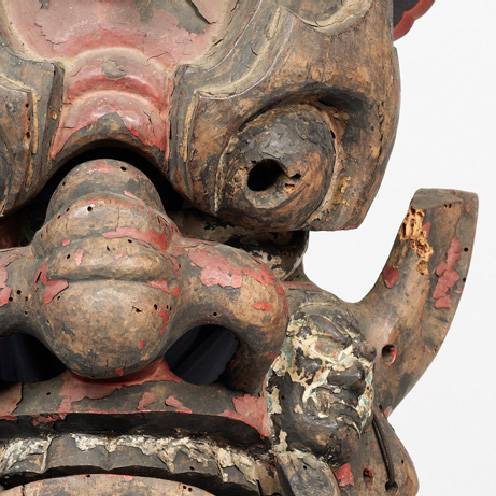
We preserve sacred treasures connected with the Kannon devotion and the Eight Thunder Gods mask–based talismanic faith that flourished in the medieval and Edo shogunate periods, as well as the National Treasure statue of Yakushi Nyorai.
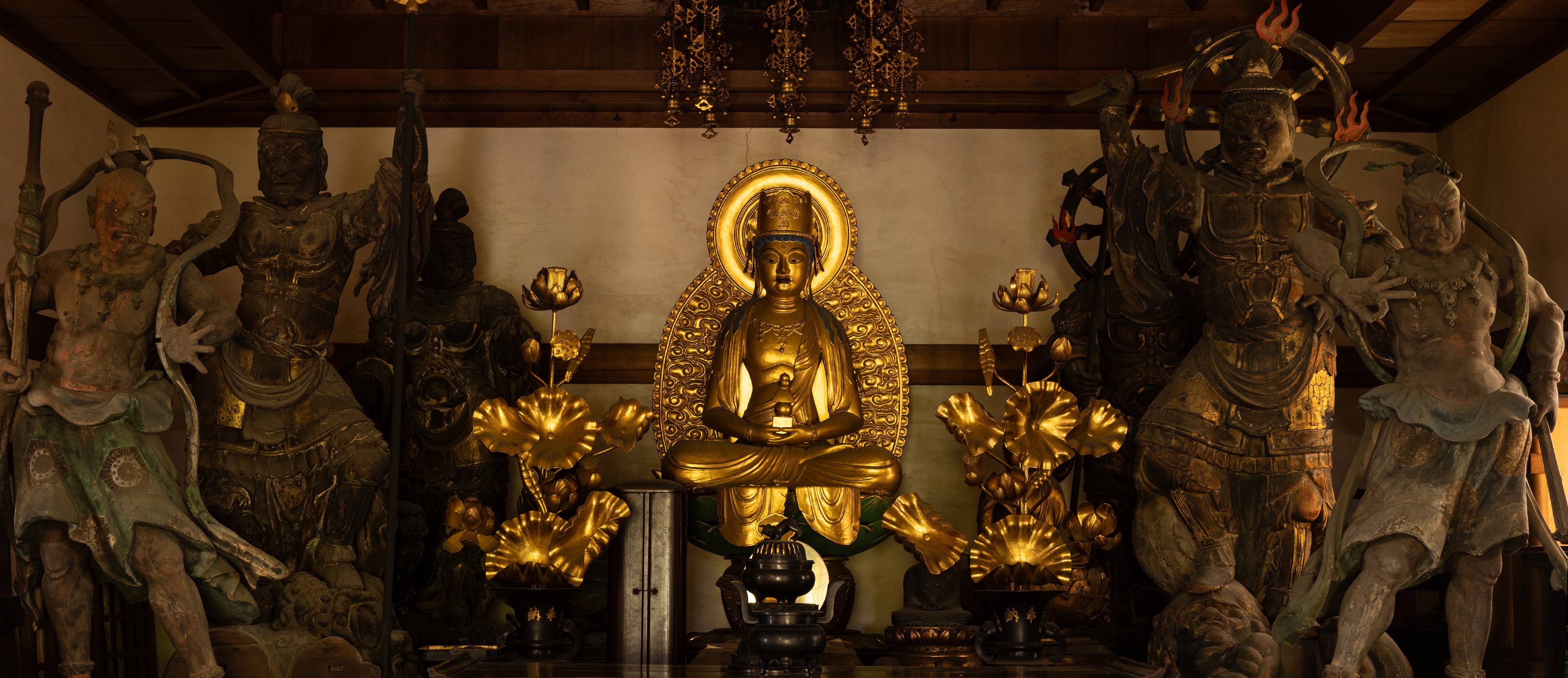
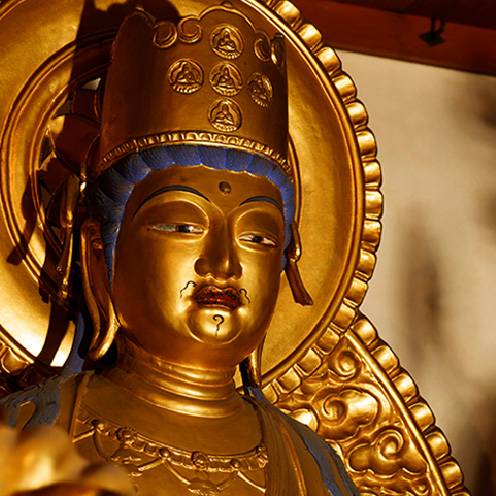
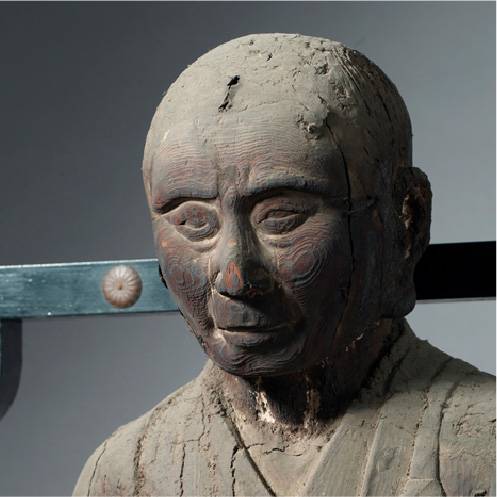
In addition, in order to hand down to the world the origins of Gango-ji, we respectfully enshrine Miroku Buddha, the principal object of worship of the Hosso school, together with the statue of Venerable Dosho, who may be called a founding figure of Japanese Buddhism.

当寺の主な寺宝

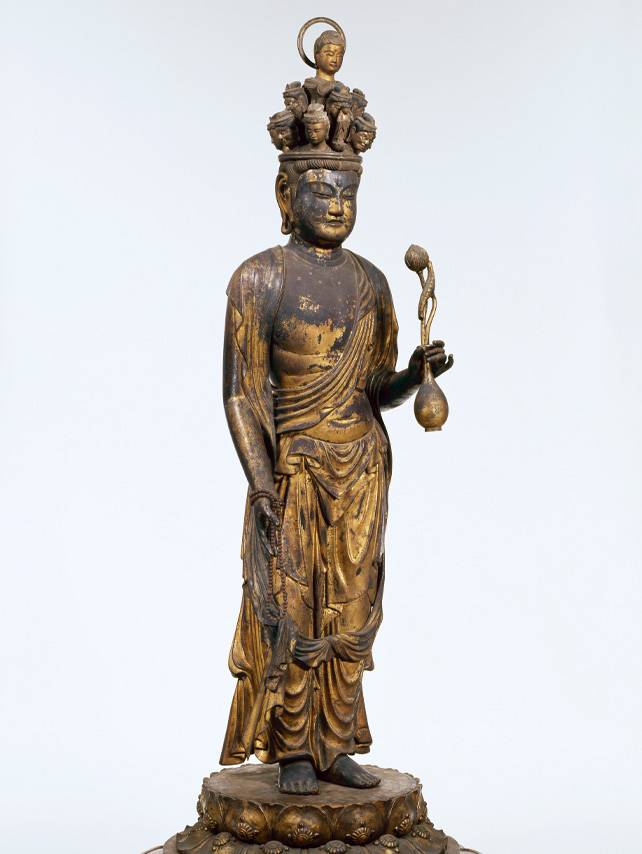
The Eleven-faced Kannon statue

  • Important Cultural Property
  • 13th Century

Shows a strongly classical style of form.
From the late Edo period onward, woodblocks and old documents modeled on this image are known, and some researchers have suggested that it may have served as a substitute image inheriting the miraculous power of the Chūmon Kannon, which was lost in the fire together with the Main Hall.

Photo courtesy of Nara National Museum.
ON LOAN

Nara National
Museum
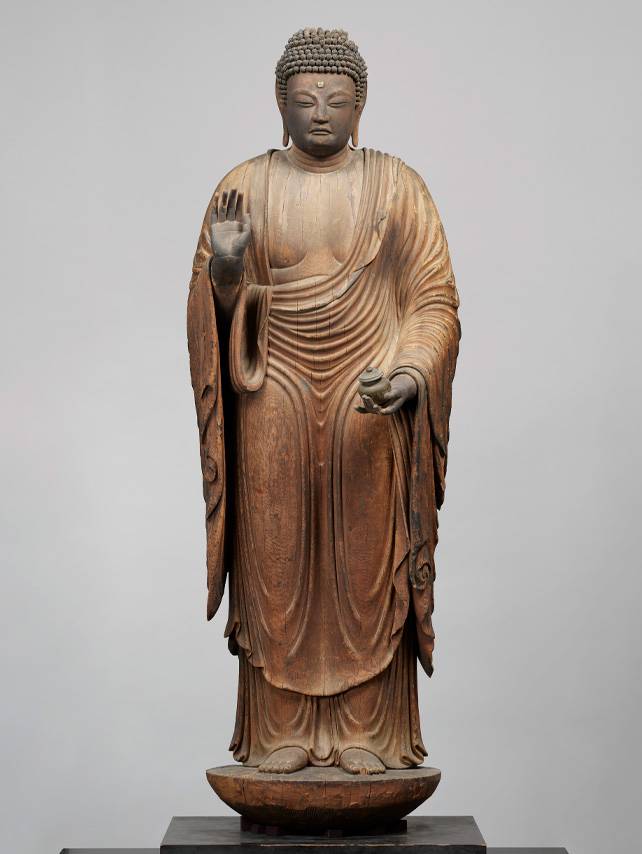
The Yakushi-Nyorai statue

  • National Treasure
  • End 8C to end 9C

The standing statue of Yakushi Nyorai, designated as a National Treasure, is a Buddha image carved from a single block of wood, but its detailed origin story has not been handed down. It was formerly enshrined in the Great Pagoda, and there is a tradition that, when the pagoda caught fire, monks from the nearby Renjo-ji Temple carried the statue out on their shoulders. According to the tale, one of the monks prayed in his heart, “If you wish to be saved, please hold on to my shoulders,” and, wondrously, they were then able to carry the statue out with ease.

Photo courtesy of Nara National Museum.

ON LOAN

Nara National
Museum
諸仏・史跡

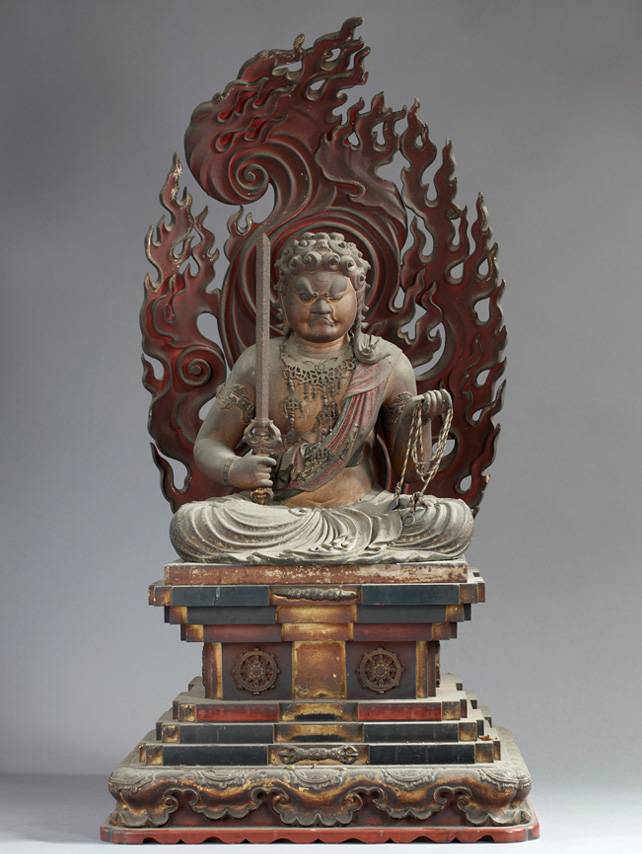
Statue of Fudō Myōō

  • Nara City-designated
    Cultural Property
  • End 17th century

Commissioned by the wishes of Ven.Toshio of the Todai-ji Kaminobō, and created by the Kyoto sculptor Shimizu Ryūkei under the guidance of Hōzan Tankai.

Photo courtesy of Asukaen

Statue of Jizō Bodhisattva
and the thousand Jizō images

  • End 11th century to 12th ventury

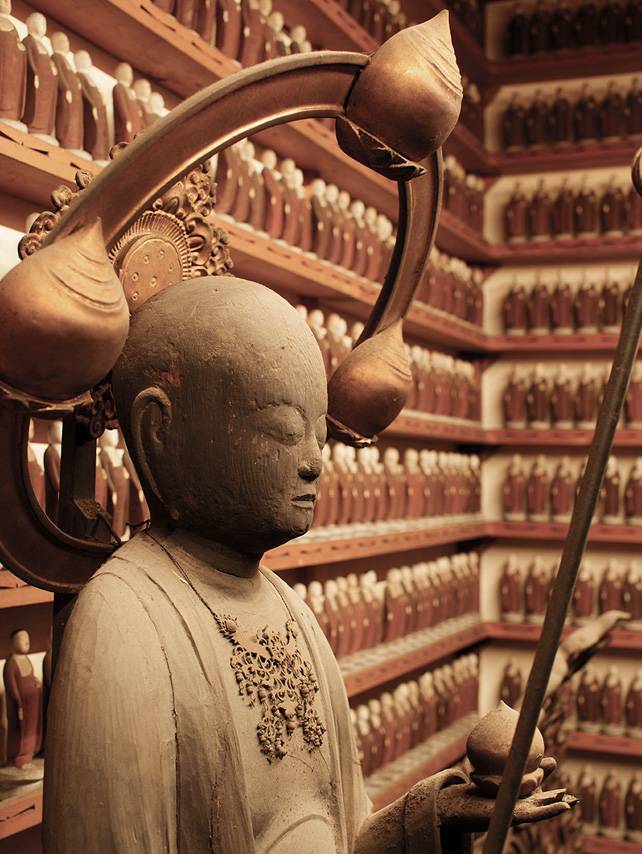
The standing statue of Jizō Bodhisattva is a wooden image with inlaid crystal eyes and lacquered gold leaf. In the medieval period, the idea spread that a hell lay beneath the ground of Kasugano. In Naramachi too, Jizō Bodhisattva has long been regarded as the original Buddhist form (honji-butsu) of Kasuga Myōjin, the deity who saves beings from the hell beneath the earth. It seems that people believed the greater the number of Jizō images, the stronger his saving power would become.

The Four Heavenly Kings (from left: Zōjōten, Kōmokuten, Tamonten, and Jikokuten)

  • 13-14th century, and 20th century

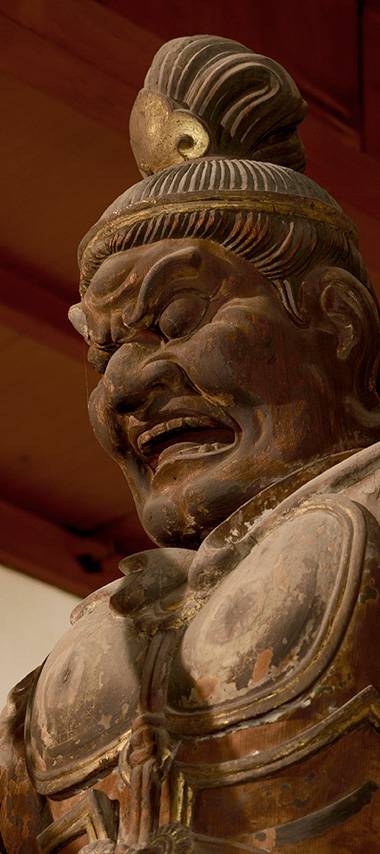
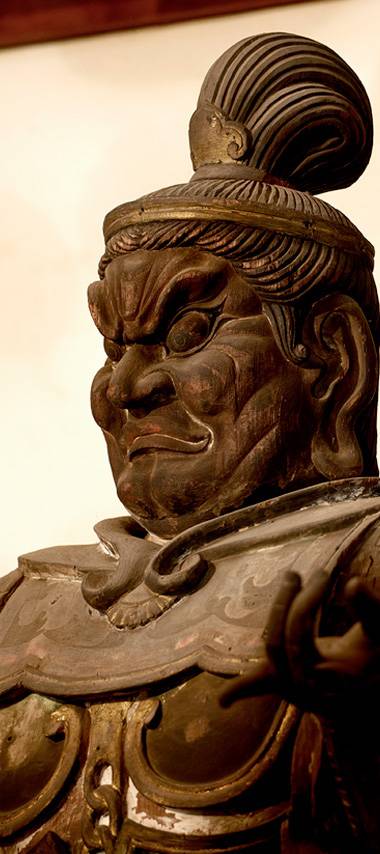
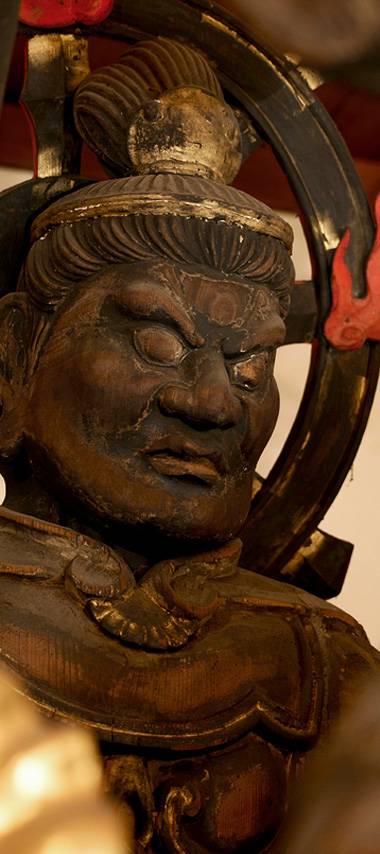
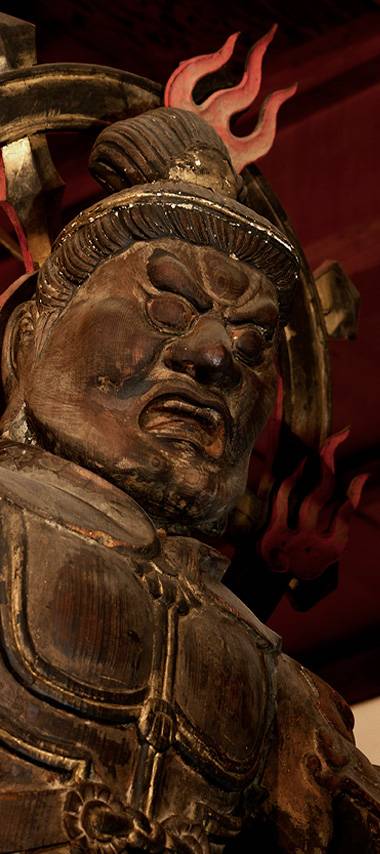
Zōjōten and Kōmokuten are works in the Great Buddha Hall style from the Kamakura period. Although all four Heavenly Kings were rescued from the fire at the end of the Edo period, Jikokuten and Tamonten were severely damaged, and these two deities were newly created in 1934 by the Naramachi sculptors, the Ishihara father and son.

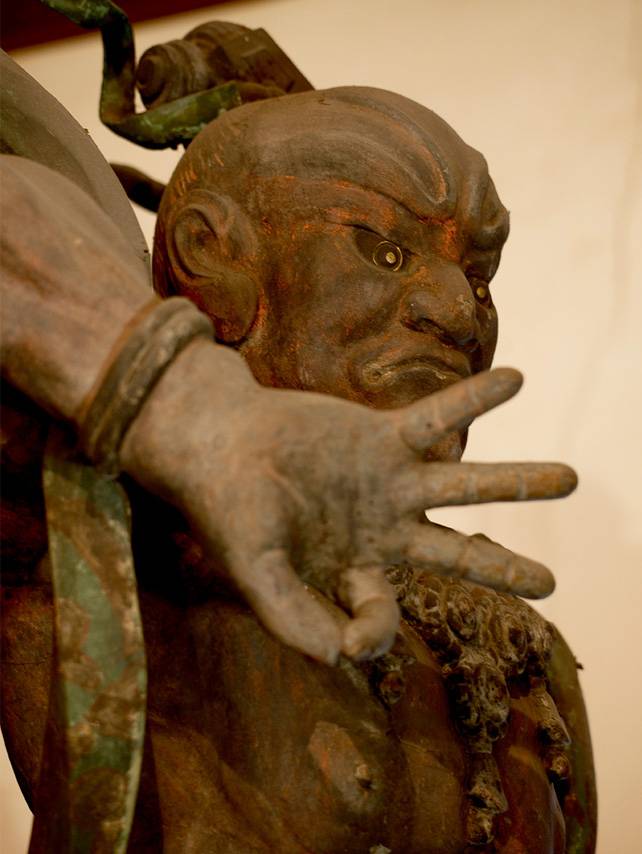
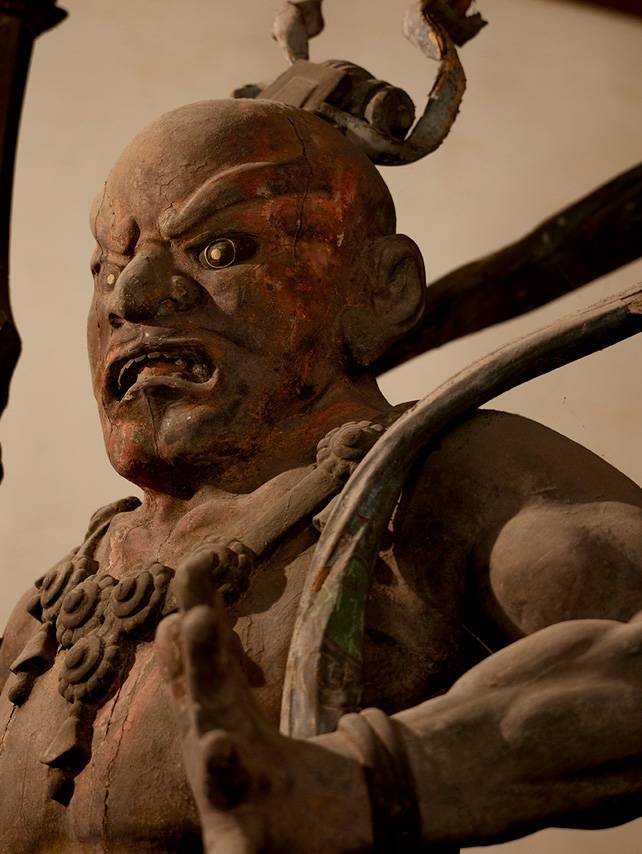
The guardian Kongoh-Rikishi statues

  • 14th century

It is believed that they were positioned by Ven. Keishin Mizuno, following the example of the guardian statues at the Great South Gate of Todai-ji Temple.

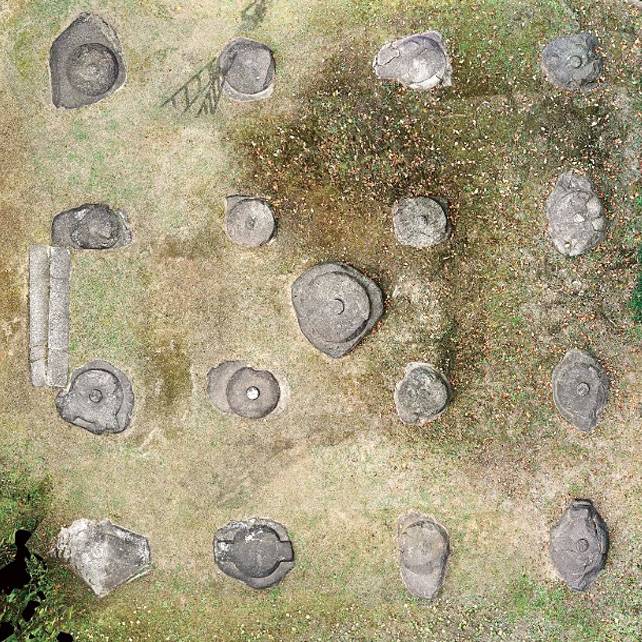
Gango-ji great pagoda foundation stones

  • National Historic Site

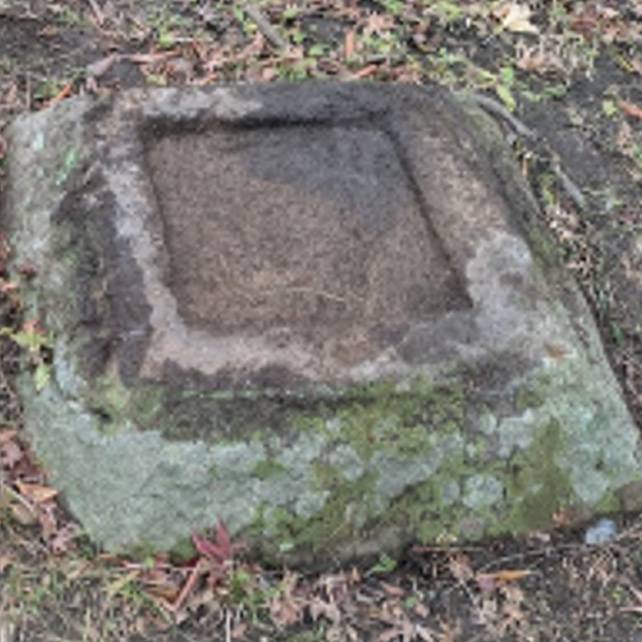
Although the pagoda was destroyed by fire in the midst of the 19th century, its seventeen foundation stones from the Nara period remain almost completely intact, making it a rare example in Japan.

Foudation stones from Asuka period

  • 6th century

Foundation stones of the same type and period as those used at the 6th-century Asuka-dera Temple were relocated here to the Gango-ji Pagoda temple site.

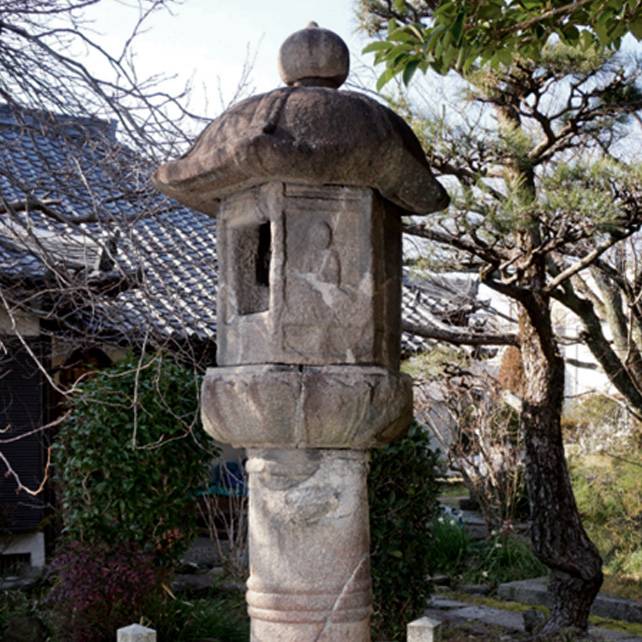
Crying Lantern

  • Mid-13th century

According to legend, this stone lantern was purchased by the Shimomura family of Kyoto in the mid-18th century, but it was eventually returned to Gango-ji after it was said to weep every night out of homesickness.

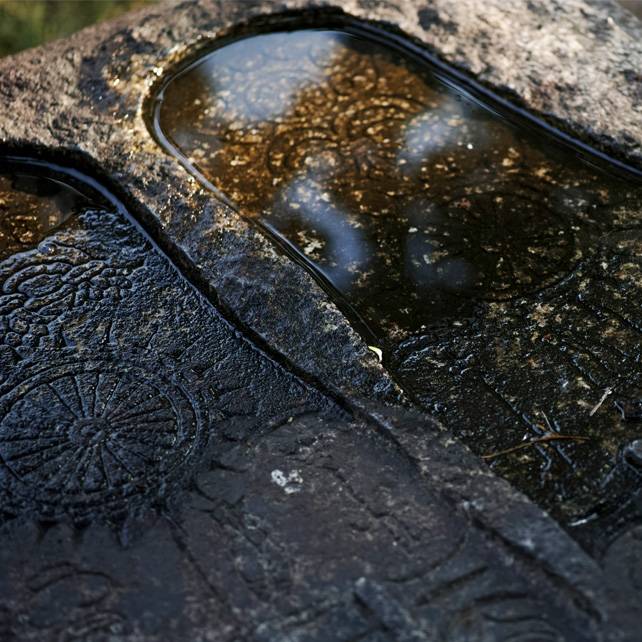
Buddha's Footprint

  • 1930s

Dedicated in commemoration of the publication of The Gango-ji Oh-kagami in the 1930s, this paired Buddha footprint stone was modeled after the one at Yakushi-ji Temple.

Other Buddhist images enshrined in the Main Hall

  • Ven. Gomyō (traditionally attributed)
  • Ven. Myōsen (traditionally attributed)
  • Eleven-faced Kannon (Bodhisattva of Compassion) housed in a miniature shrine
  • Prince Shōtoku at Age Two
  • Kūkai (Kōbō Daishi)
  • Jizō Bosatsu (Bodhisattva of Salvation)