
Seasonal admission
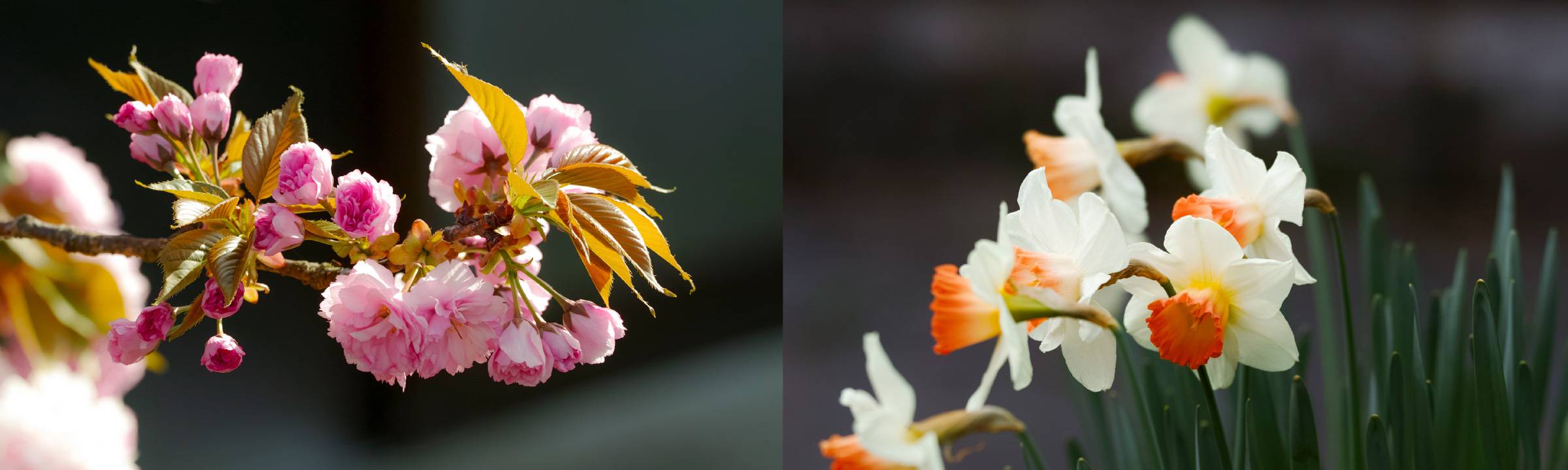
- In Late March to early April
- Spring admission
- June
- Hydrangea viewing admission
- Mid. September
- Bush Clover & Spider Lilly
- Mid. Oct. to beg.
- Lilly viewing admission
- November
- Fragrant olive viewing admission

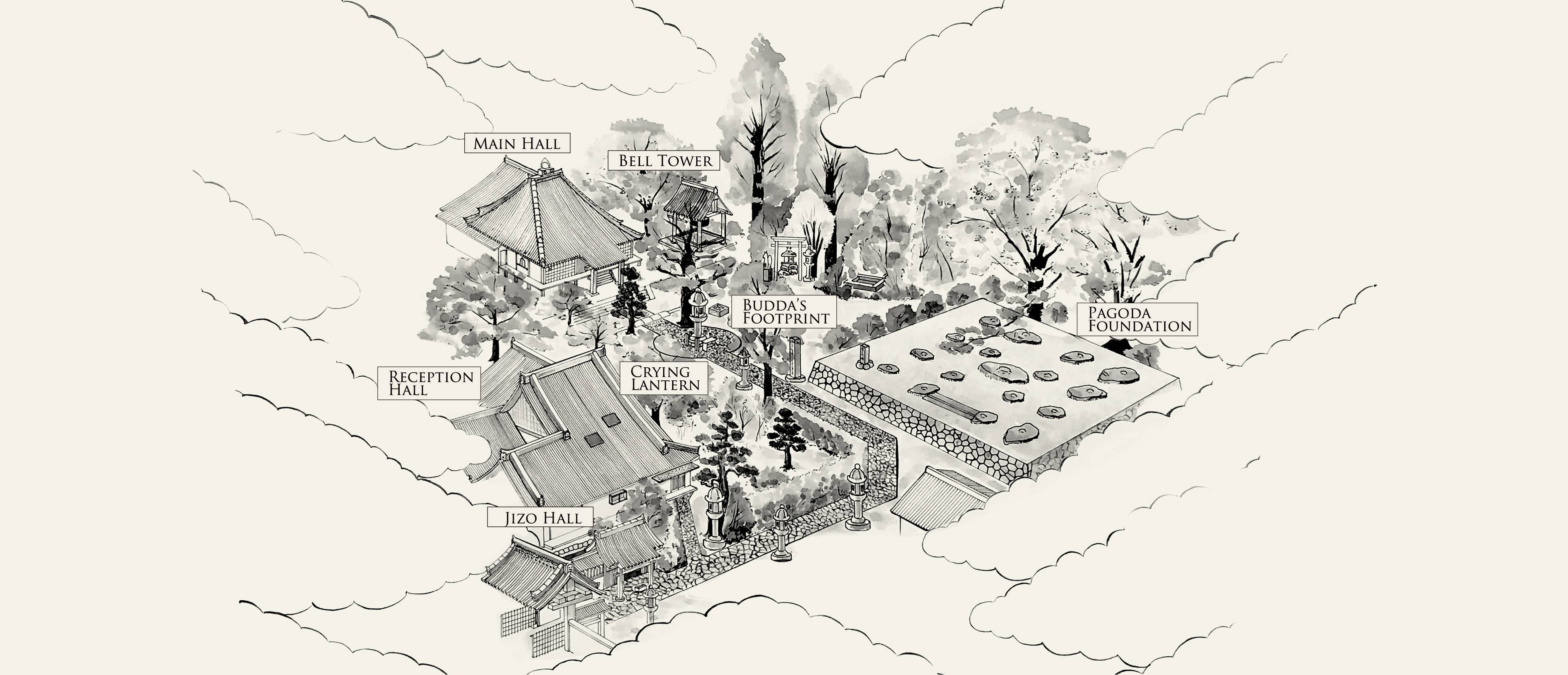
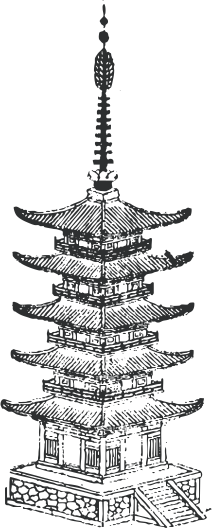
The Five-Story Pagoda of Gango-ji Temple is estimated to have stood about 49 meters tall. From the Nara period(8C) onward, this grand tower was carefully maintained and protected by generations of monks and local residents. Many donations were gathered through acts of devotion to fund repeated repairs. However, in 1859, during one such restoration, the pagoda was completely destroyed when fire spread from a nearby blaze. An elevation drawing believed to have been made from actual measurements during that repair project still survives today.
At the time of the fire, the temple’s National Treasure statue of Yakushi Nyorai (the Healing Buddha) was enshrined in the pagoda. According to tradition, a monk from the neighboring Renjo-ji Temple carried
the statue to safety. It is said that as he prayed silently, “If you wish to be saved, please take hold of myshoulder,” the statue became light enough to lift with ease. Seventeen foundation stones of the original pagoda remain in nearly perfect condition.
They are now designated as a National Historic Site and are among the rare surviving examples of their kind in Japan.
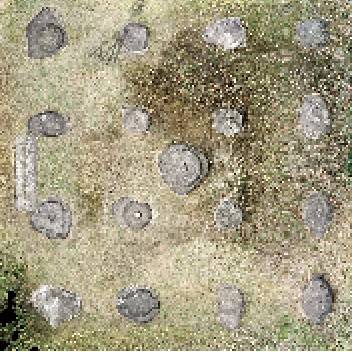 Photo Courtesy of Gangoji Institute for Research of Cultural Property
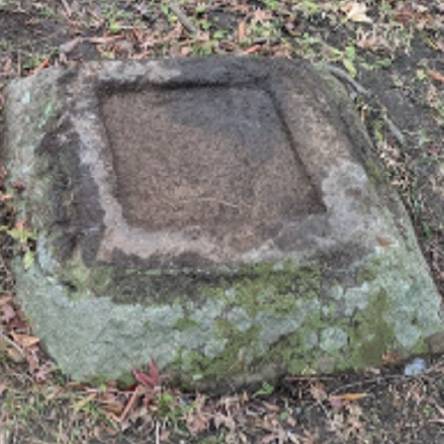
Investigations have revealed that the foundation stones scattered throughout the temple grounds are volcanic rocks believed to have been quarried in the Murō region, an area east of Nara known since ancient times for its high-quality stone. Stones of this type were widely used in the sixth century for temple foundations such as Asuka-dera—the first full- scale Buddhist temple in Japan—built under the patronage of the powerful Soga clan, who were instrumental in introducing Buddhism to the country. The dating corresponds closely, suggesting that these stones were transported from ancient Asuka, Japan’ s first Buddhist capital, to Heijō-kyō (the city of Nara) long ago. They remain enshrined within the grounds of Gango-ji Temple, continuing to safeguard the sacred flame of Buddhist faith and tradition.
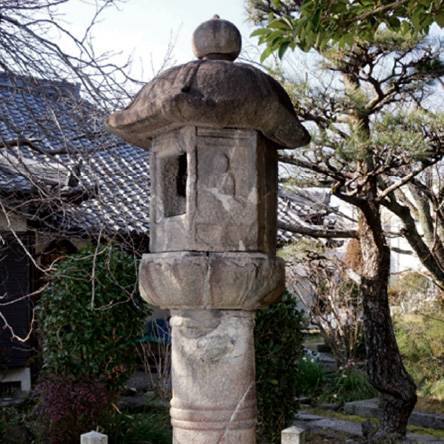
The name Naki Tōrō (“Crying Lantern ”) comes from a legend dating to the mid-18th century. According to the story, the Shimomura family of Kyoto donated a new stone lantern to the temple and took the original one back to Kyoto. However, it was said that each night the lantern turned toward Nanto (the old name for Nara) and cried, “I want to go home .” Disturbed by this, the family eventually returned the lantern to Gango-ji Temple. As a result, two stone lanterns remain at the temple to this day. The Yamato Meisho Zue (Illustrated Guide to the Famous Places of Yamato ), compiled in the late 18 th century, already depict these two lanterns in its illustration of the temple.
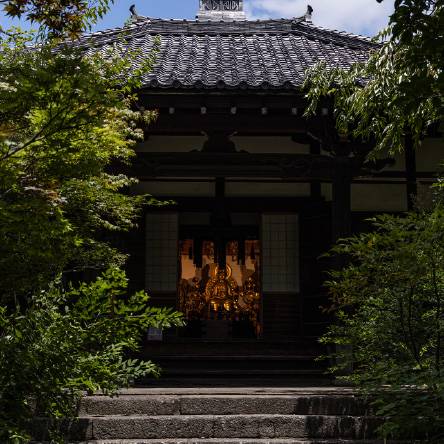
Since the Nara period, when the Chūmon Kannon image was transferred to the monastic quarters that once stood here within the great Gango-ji temple complex, this hall has been known as the Kannon Hall and became a major center of Kannon devotion in Nara. Later, however, it was destroyed along with the Great Pagoda in a great fire at the end of the Edo period. During the Shōwa- era restoration, the hall was rebuilt as the Main Hall. Today it enshrines many deities and buddhas, including the principal image of Maitreya Bodhisattva, the Four Heavenly Kings, the Kongō Rikishi (Nio guardians), and the Eight Thunder Gods Mask.

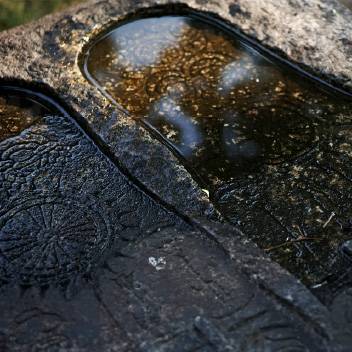
It was dedicated in commemoration of the publication of the “Gango-ji Ohkagami" in the early Shōwa period. It is a paired-style Buddha’s Footprint Stone modeled after the one at Yakushiji Temple.
12, Shibanoshinya cho, Nara-shi, Nara-ken
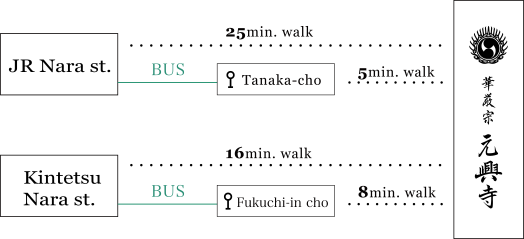
On foot:25min. by Bus:Get off at "Tanaka-cho"
,and 5min. walk
On foot:16min. by Bus:Get off at "Fukuchi-in cho" and 8 min. walk
Approx. 45 minutes from JR Kyoto Station to JR Nara Station.
Approx. 40 minutes from Kintetsu Kyoto Station to Kintetsu Nara Station
Approx. 50 to 70 minutes from JR Shin-Osaka Station to JR Nara Station via Kyuhoji (JR Osaka Higashi Line)
Approx. 30 minutes from Kintetsu Namba Station to Kintetsu Nara Station.