

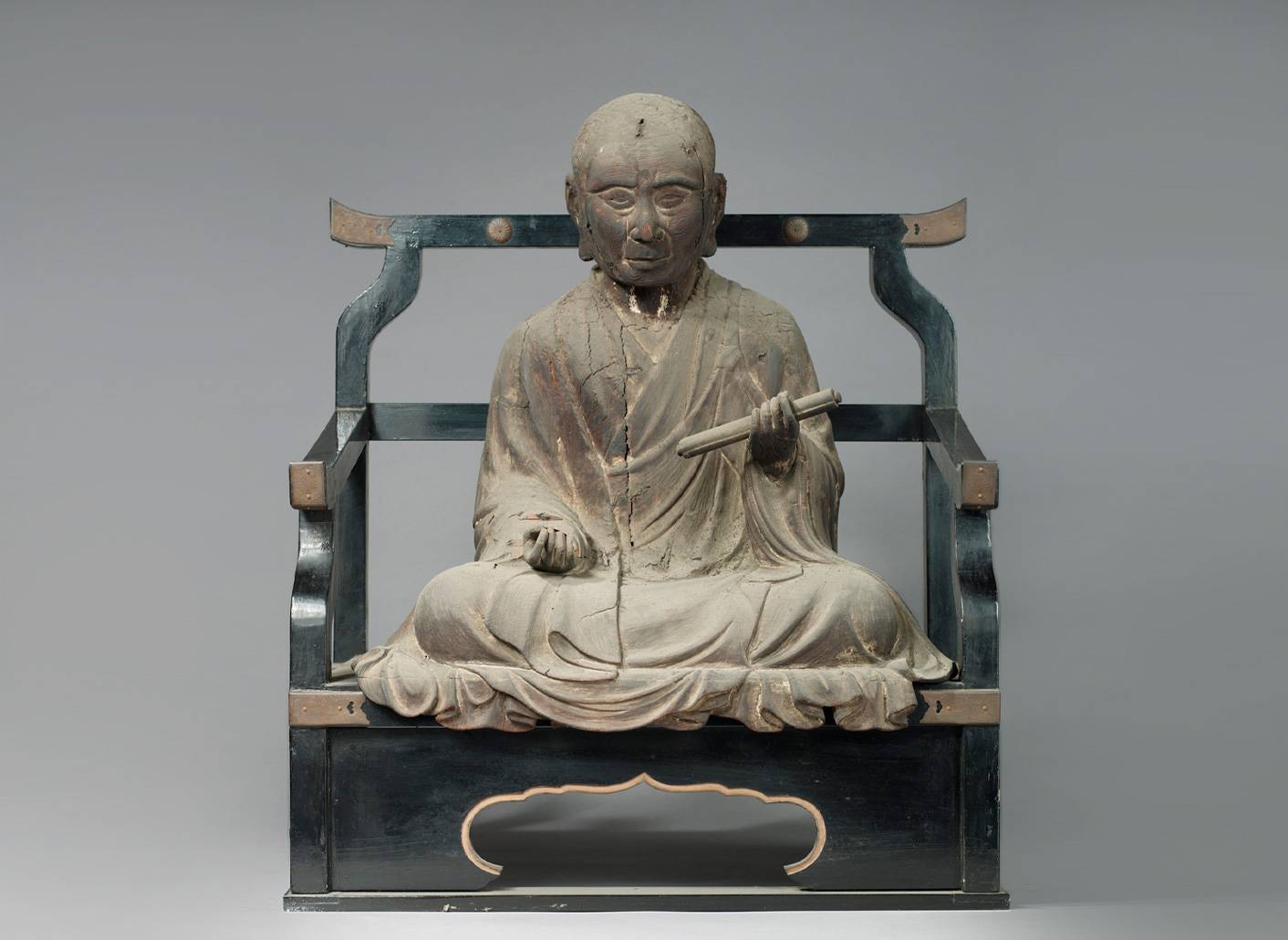
Dōshō (629–700) was a prominent monk of the Asuka period who introduced the most advanced Buddhist thought and practice from Tang China to Japan. Traveling to China in 653, he studied directly under the great master Xuanzang (Tripitaka), from whom he learned the doctrines of the Hossō (Faxiang) and Yogācāra schools, as well as under Huiman, from whom he received instruction in Zen meditation.
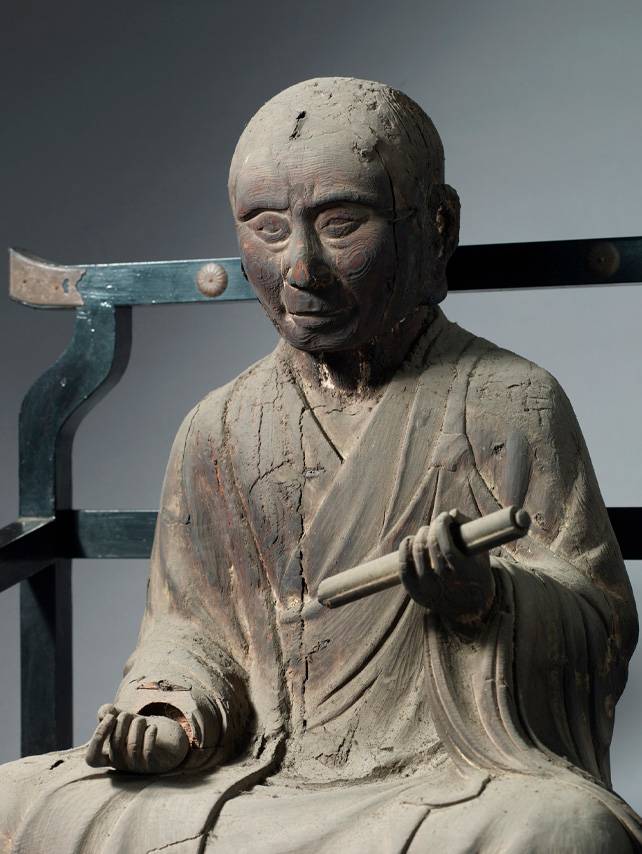
After returning to Japan in 660, Dōshō established a Zen Hall at Asuka-dera, which became one of the earliest centers for Zen practice, and he laid the foundation of the Japanese Hossō school—later known as the Gango-ji lineage. He devoted himself to studying and teaching the scriptures he brought back, spreading Buddhist learning and practice throughout Japan.
His social contributions, such as building wells and bridges, reflected the compassionate ideals of Buddhism and inspired the later works of his disciple Gyōki.
Dōshō’s pioneering efforts marked a turning point that set Japanese Buddhism on its own distinctive path of development.
Chronological Table of Dosho
- 596 AD
- Soga no Umako establishes Asuka-dera, one of Japan's first major Buddhist temples.
- 629 AD
- Dōshō was born in Osaka, as the son of Fune no Esaka, a member of the Fune clan, which was of Baekje (ancient Korean kingdom) descent.
- 645 AD
- Prince Naka no Ōe (later Emperor Tenchi) and Nakatomi no Kamatari assassinated Soga no Iruka, shifting political power to the emperor.
- 653 AD
- Dōshō, at the age of 24, joins an envoy to Tang China. He becomes a disciple of Xuanzang, the famous Buddhist monk known as "Tripitaka" in *Journey to the West*.
- 661 AD
- Dōshō returns to Japan from Tang China. He is said to have traveled across Japan for over ten years, spreading Buddhist teachings.
- 662 AD
- Dōshō builds a Zen hall southeast of Asuka-dera.
- 673 AD
- Prince Ōama emerges victorious in the Jinshin War and ascends to the throne in Asuka as Emperor Tenmu.
- 691 AD
- The Buddhist monk Gyōki studies Yogācāra school at Asuka-dera under Dōshō’s guidance, according to the Record of High Priest Gyōki's Deeds.
- Unknown Year
- Dōshō embarks on a journey of selfless deeds, reportedly helping with the construction of the Uji Bridge and Yamazaki Bridge.
- 700AD
- Dōshō passes away at the age of 72, attaining Nirvana. He becomes the first recorded person in Japan to be cremated according to his will.