
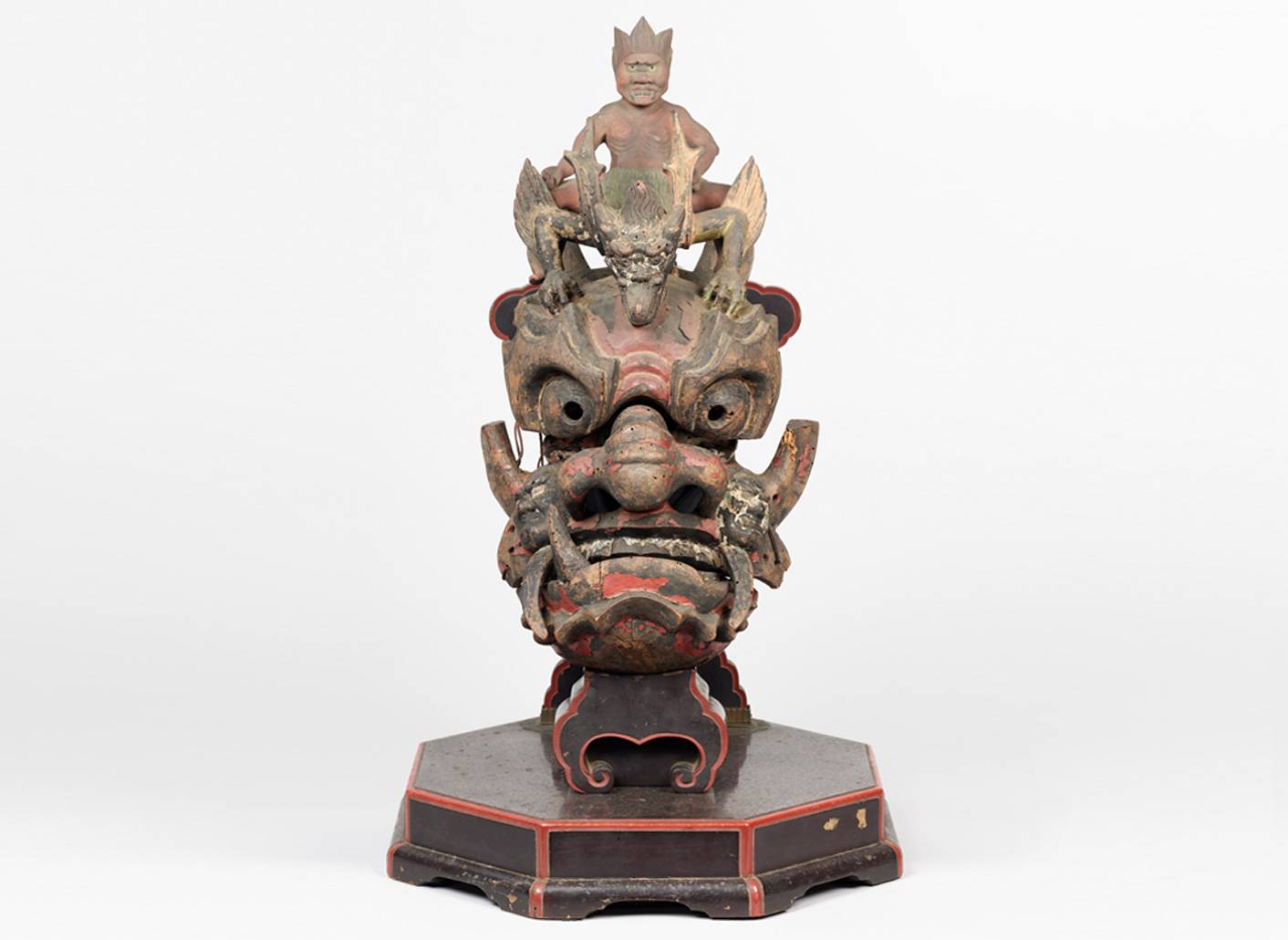
The Eight Thunder Gods Mask is tied to a tale from the 9th- century Buddhist work Nihon Ryoiki. In this story, a mythical figure named Dojo Hosshi, believed to be the child of thunder, defeated a demon at Gango-ji Temple.
His face at that moment was believed to have transformed to Eight Thunder Gods, and for this reason, it was venerated as an object of spiritual power.
From 17th to 18th century, the mask was frequently displayed to encourage donations for temple repairs.
To promote its spiritual efficacy, a text called Hachiraijinmen Ryaku Engi was created, and initially, it was praised for its benefits in "protecting from misfortune" and "fire prevention."
Wooden blocks were made for printing, and protective talismans were printed. In the 19th century, it was also used in rain rituals, with rural villages requesting its presence.
Records also note that when Nara city magistrate Toshiakira Kawaji visited here, it was kept in a special cabinet.
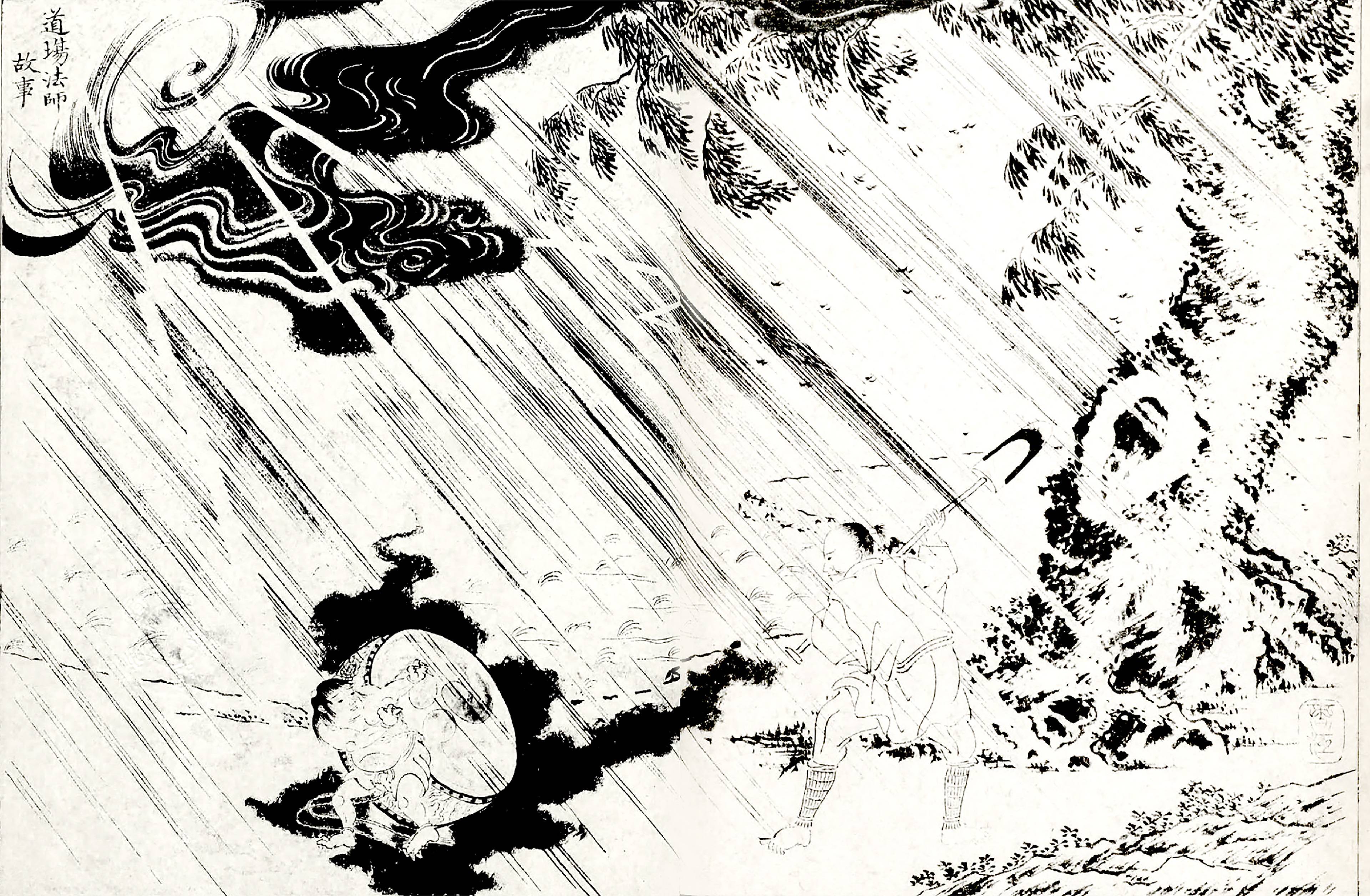
Edited by Okada Kei and Noguchi Michinao; illustrated by Odagiri Shunkō. Nagoya Onkokai. Source: National Diet Library Digital Collections (Japan).
Brief History of the Eight Thunder Gods Mask
The deity spoke to him, saying, “If you do not strike me, I will grant you a child.” Soon after, a boy was born wrapped in a sacred serpent and blessed with extraordinary strength. He later entered the imperial court as a sumo wrestler known as Dada no Rikido (“ Dada the Strong Child ”).
Eventually, he renounced the world and became a monk at Gango-ji Temple,
taking the name DōjōHosshi. As an incarnation of the thunder god, he
vanquished a demon haunting the temple bell tower. A mask modeled after
his divine form was created — known as the Eight Thunder Gods Mask This
sacred mask was believed to possess the power to ward off epidemics,
calamities, lightning, and even vengeful or evil spirits.
(Visitors purchased this protective amulet card will also
receive a full modern Japanese/English translation of the
associated origin legend.)
Bokuoh-shinga byShun-boku
Ohoka
|UC- Berkeley-East-
AsianLibrary
版木一覧
-
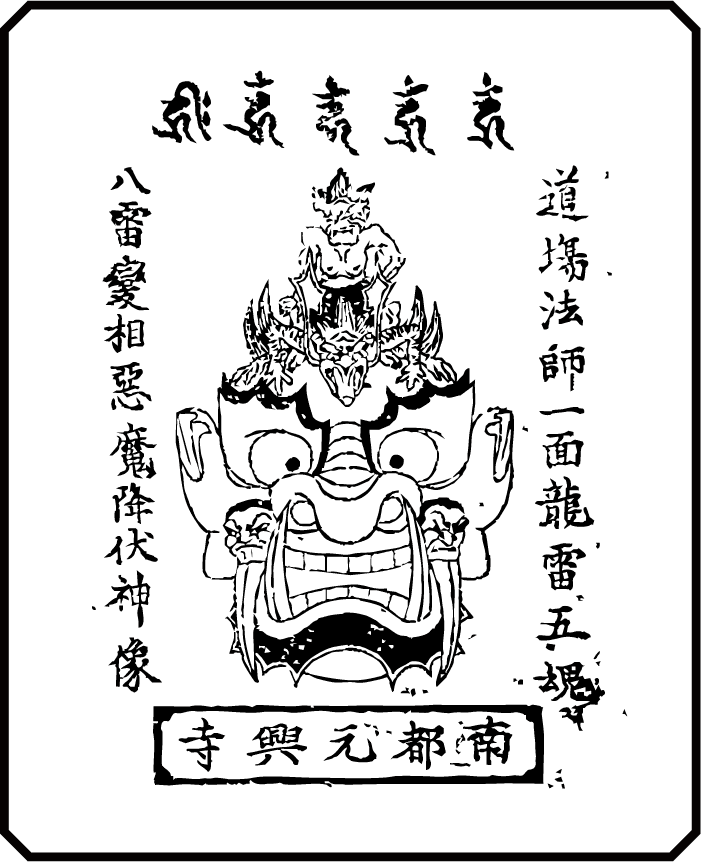
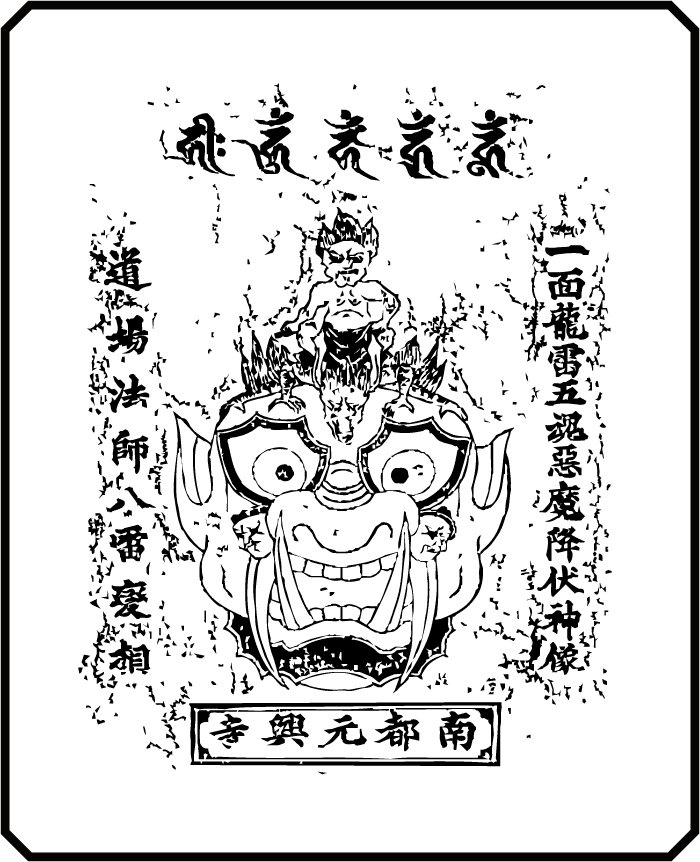
Eight Thunder Gods Mask Talisman
Edo period wood printing block(small) Photo Courtesy of Gangoji Institute for Research of Cultural Property -
Eight Thunder Gods Mask Talisman
Edo period wood printing block(large) Photo Courtesy of Gangoji Institute for Research of Cultural Property
At this temple, two wooden printing blocks—large and small—used for making Eight Thunder Gods Mask talismans in the Edo period still survive today. It is said that Ven. Keishin Mizuno, who led the temple’s restoration after its decline during the Meiji and Taishō eras, revived the distribution of these talismans using these very blocks.
-
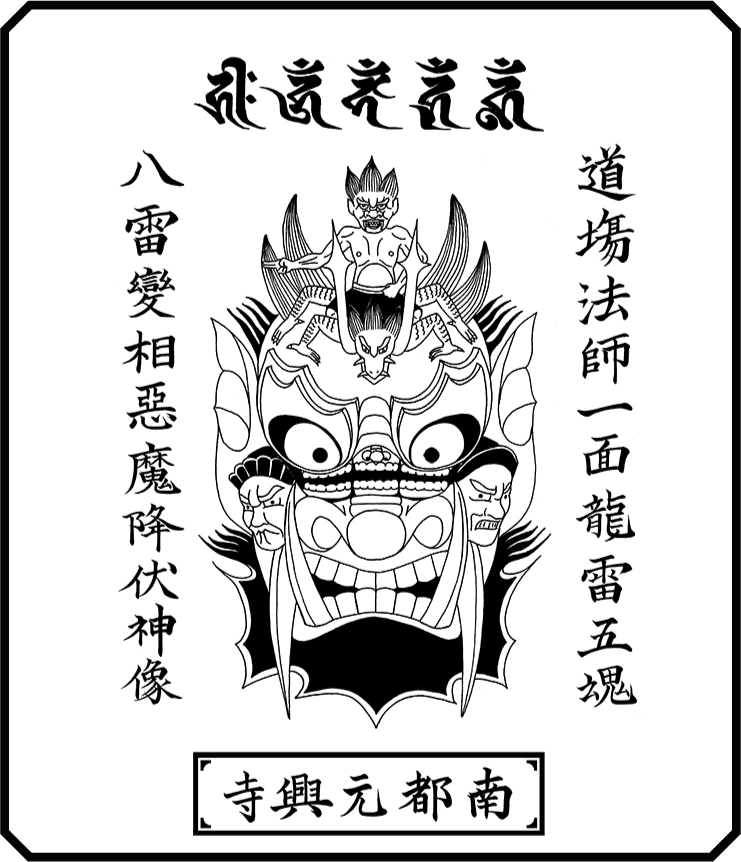
Eight Thunder Gods Mask Talisman
wood printing block (newly designed)
In 2026, after seventy-six years, The Eight Thunder Gods Mask finally returned to this temple.
The newly designed Eight Thunder Gods Mask Talisman carries on the tradition of those historic woodblocks, while marking the significant occasion of the mask’s return from Nara National Museum.
It stands as a “modern talisman” newly engraved for our time.
We see this homecoming as the first step in our restoration and hope to revive the ancient Nara's tradition of exorcistic faith that once flourished here from the medieval period onward.
May this sacred mask serve as a source of spiritual support, safeguarding us from the misfortunes brought by epidemics, accidents, lightning, and natural disasters.