

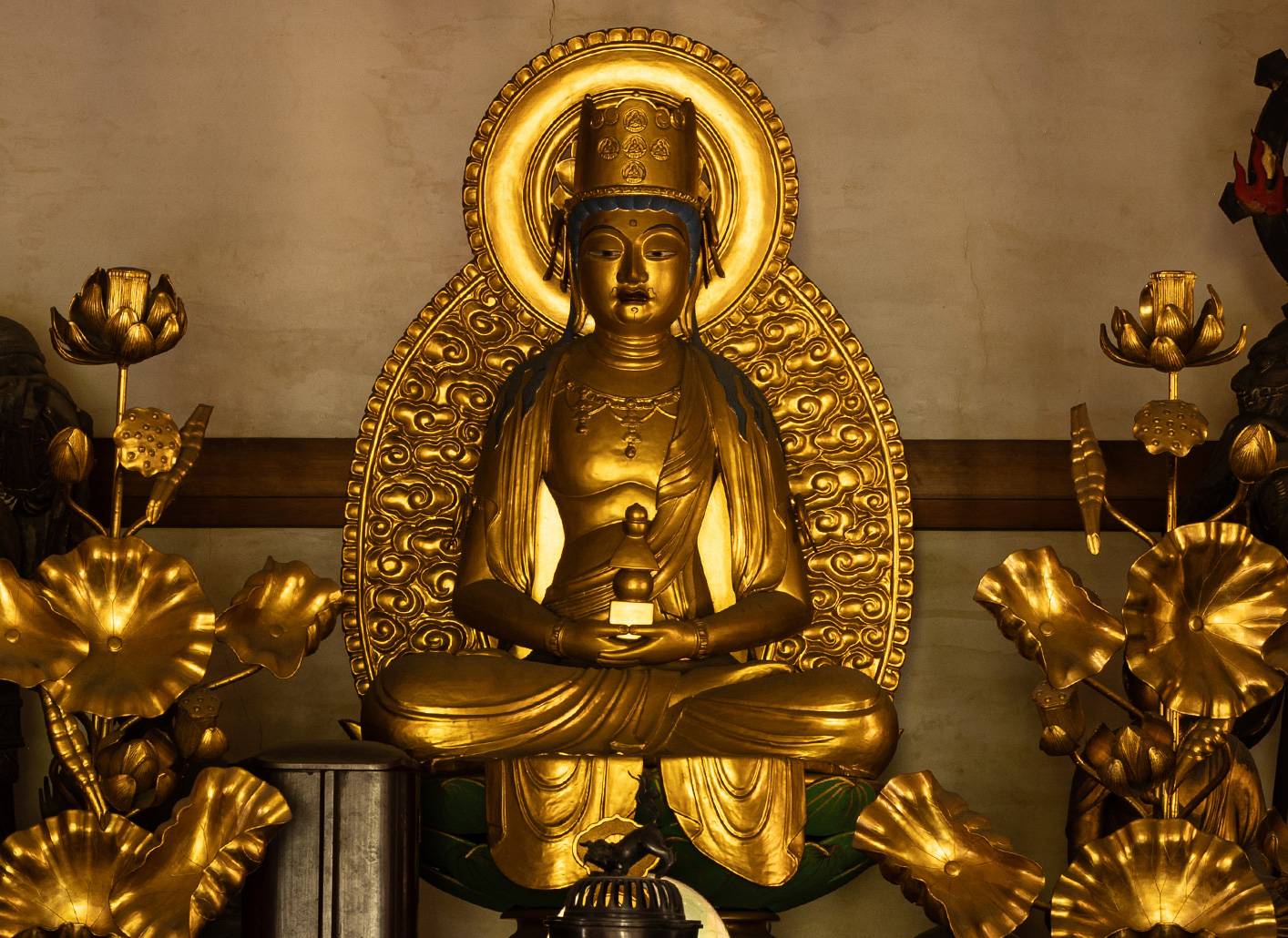
This statue was created in 1934 by Buddhist sculptors Ishihara Sadaoki (or Joko) and Ishihara Tomooki (or Choko) at the request of Chief Priest Keishin Mizuno, who revived this temple in the early 20th century. According to Keishin’s records: "On the night of October 18, 1933, while performing a ritual, Maitreya appeared before me. Looking back at the history of Gango-ji Temple, I found that the first principal image brought from ancient Korea was a stone statue of Maitreya. (Omission) I had long wished to restore this principal image but was not familiar with its exact appearance. During my pilgrimage to Shikoku, I visited the Maitreya statue at Jorakuji Temple in Tokushima and realized that it was exactly the same as the figure I had seen in my spiritual vision. I then sketched the statue and approached the Ishihara father and son to commission its creation."
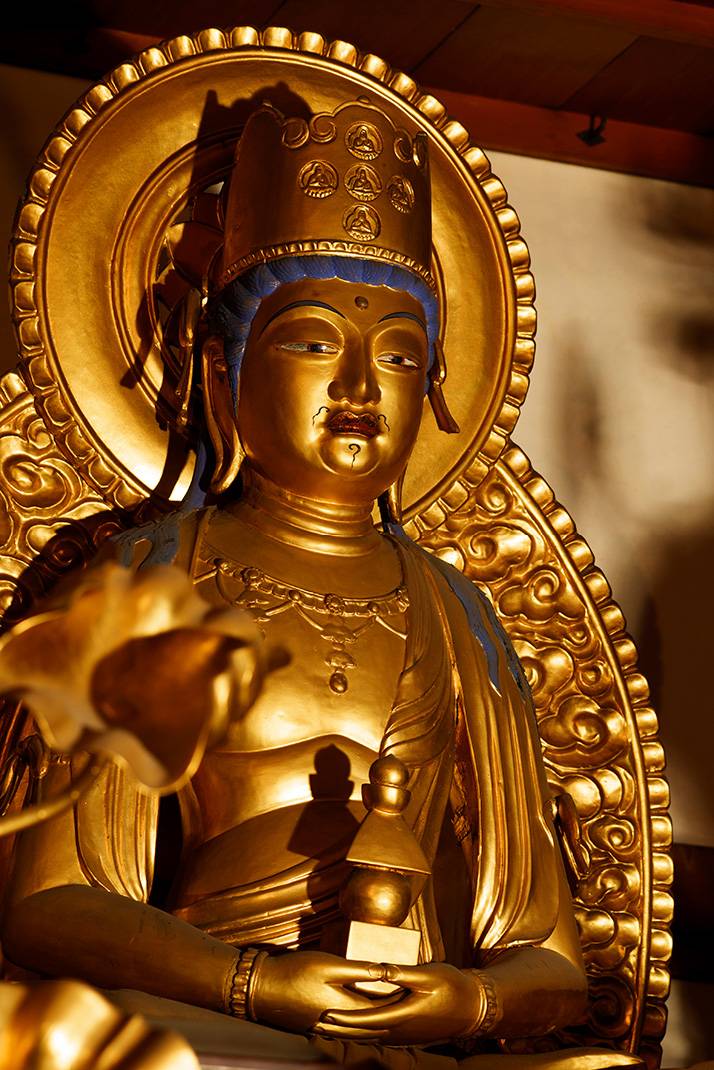
The statue wears Gochi Houkan (a crown adorned with the incarnations of the Five Buddhas: Shakyamuni, Akshobhya, Amitabha, Vairocana, and Ratnasambhava), and features a Byakugō (a curl of hair between the eyebrows) and Sandōsō (three creases on the front of the neck symbolizing the three stages of enlightenment). The statue's hands are placed together in front of the abdomen, holding Gorintō, while sitting in the Lotus position. The surface of the statue is coated with a thick layer of gold paint, while blue pigment is applied to the hair and eyebrows. The extremely thin chest and abdomen, along with thick legs, are depicted in a manner reminiscent of examples from the 8th and 9th centuries.